The widower of the late Dame Barbara Windsor has spoken about campaigning for dementia research to honour her memory.
Scott Mitchell, Chair of the People’s Forum, which is being established as part of the Dame Barbara Windsor Dementia Goals Programme, said campaigning for research into a cure for dementia is “what drives me five and a half years later.”
“Barbara started it off with us with the dementia revolution. When she passed I kept campaigning, and I thought that was important because it was something she started, and she made a big difference.
“Barbara, when she went public, the dementia charities couldn’t believe the effect that it had on the rest of that world. Because a lot of people when they get a diagnosis, and it was the same for Barbara for the first four years, nobody knew about it, and that was really hard.
“When you’ve got someone like Barbara who was instantly recognisable, once that starts progressing, it’s very hard to hide.
“But she didn’t want to talk about it, and of course, I had to respect her wishes.”
Scott was with Dame Barbara when she visited the then prime minister, Boris Johnson, to call for more money for dementia research.
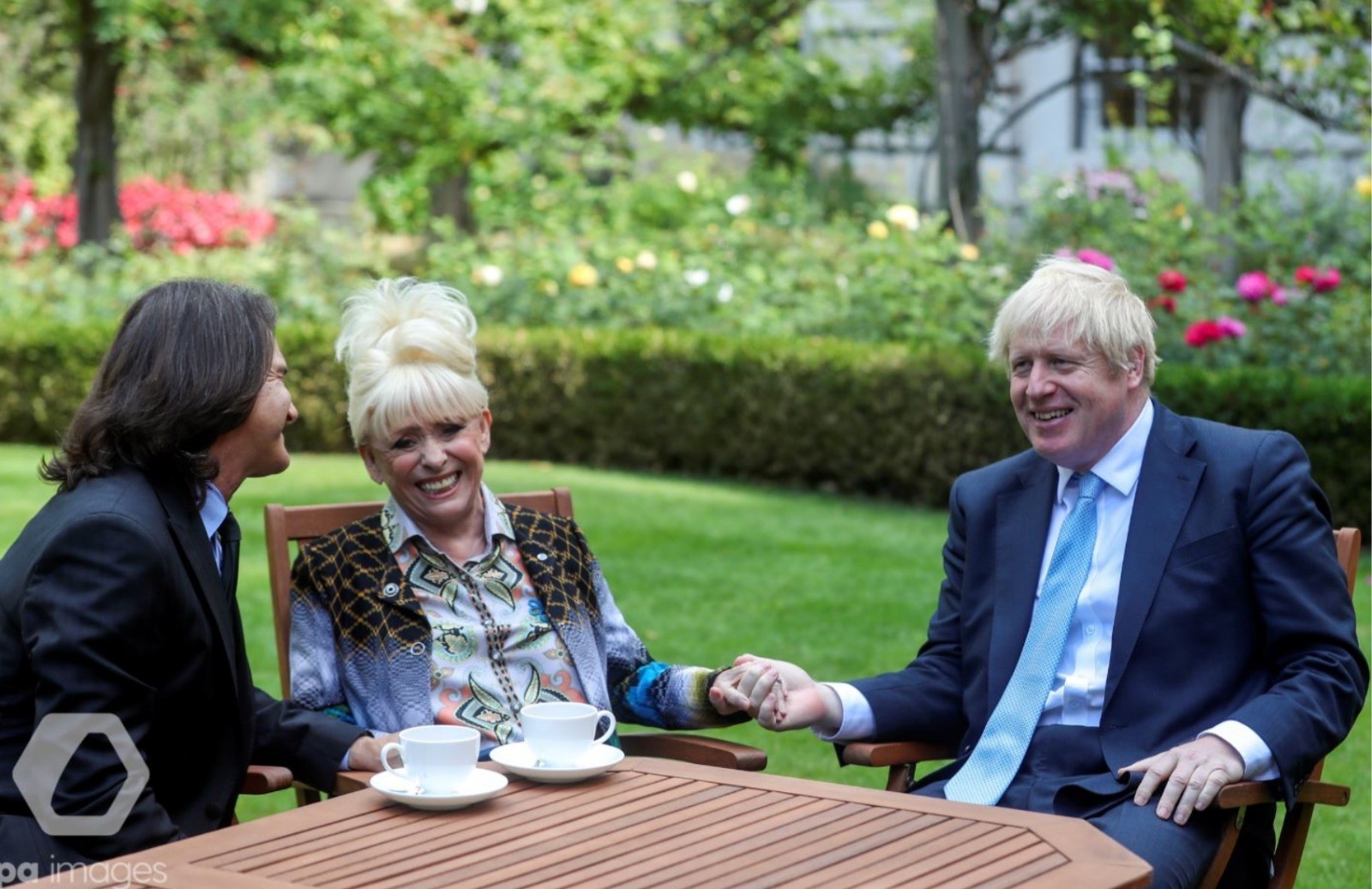
“Barbara and I went to Downing Street in 2019 when Boris had just got in, and she knew Boris from when he was Lord Mayor because Barbara was his street party ambassador.
“I can remember in the car going down, she asked me over and over again, ‘Where are we going?’ And we went with one of the charities, and we once we got there, it’s like she became Barbara Windsor again.
“She knew why we were there suddenly, and she was saying to Boris in her inevitable way, she said,
“Now come on, darling, you’ve got to do something about helping people with this dementia business. There’s not enough money for it. There’s not enough funding.”
The People’s Forum, chaired by Scott Mitchell in his role as People’s Champion for the Government’s Dame Barbara Windsor Dementia Goals programme, was established to ensure the programme’s plans were designed with input from people with lived experience from the start, through proactive engagement, partnership and transparency. It will continue to directly feed into the work of The BARBARA Alliance
“The thing about dementia is, someone can be lucid one minute and then very confused and distant the next. It’s a very baffling illness,” Scott said.
“It’s a very hard illness for the family to cope with because the other thing about it is you’re losing that person in front of you. They look the same to an extent. It’s them. At times you might be having a conversation and everything’s normal, and you say to yourself, ‘Oh, great. Maybe it’s you know maybe it’s reversing.’
“But of course in the next minute they may say something and then you realise. For instance, Barbara would often think she was in her childhood home when she spoke to me, so she’d say ‘We’re in Stoke Newington, aren’t we?’
“And at first I used to contradict her, and the thing about being a carer is you have to learn on the job because you just don’t know, and you will get things wrong.
“So what you do is at first you say, “No, of course we’re not in Stone Newington; we’re in our house. And the easiest thing you can do with someone with a loved one who is going through it is enter their reality.
“So when they do say things that don’t make sense, don’t contradict them because what you’re doing is you remind them that they’re not well.”
The People’s Forum will give people affected by dementia and other neurodegenerative conditions a voice in shaping the work The BARBARA Alliance will deliver around participation in research and clinical trials. Through workshops, discussions and ongoing engagement, members will help ensure the programme reflects the needs, experiences and priorities of those it is designed to benefit.
“I was Barbara’s primary carer for the last couple of years,” Scott said. “The first two or three were milder, but as it progressed, especially the couple of years, it became really stressful.
“It’s a very cruel disease, and it just keeps throwing curveballs at you. You don’t know what’s coming next.
“It’s terrible for the person going through it. There are a lot of people that will say, ‘Oh, you can live well with dementia’ and I believe that to a certain extent, to a certain point.
“But I do remember, you know, quite a few people who had been through it with me were honest with me quite early on, and they said, ‘Scott, this will get difficult,’ and I appreciated that towards the end.”
Scott has said the couple viewed going public with her Alzheimer’s diagnosis was another part of Dame Barbara’s charity work.
“I said to her, all your life you’ve done charity work. I said you’ve always said helping people is such a wonderful gift for you, and because of your profile, you can do that. If we speak about this, about this memory problem that you’ve got, you won’t believe how many people you’re going to help. And in that moment, I looked in her eyes and I saw the recognition.”
“It’s the most feared illness that there is. Dementia, it’s our biggest killer and it has been for a few years.
“It affects more women than it does men for some reason. One in two of us will be affected in some way; either we will have it, or we will care for someone with dementia, or know someone who’s going through it with their family.
“Research is needed. After Barbara passed, I wrote to Boris again, and I said I realise we’ve had the pandemic; everything’s gone crazy, but nothing’s happened as far as funding for dementia is concerned. People are still getting diagnosed at a terribly high rate. What’s happening?
“In the letter I sent to him I put to him the initiative from Alzheimer’s Research UK which was to say, let’s get a task force like we had for the COVID vaccine. Bring all the brilliant brains together-the pharmaceutical world, the NHS, academia, everyone-and let’s focus on dementia. Just have a task force for dementia.
“Then one morning I was in bed at about eight in the morning and my mobile went. And they said, “Hi, Scott. Yes, this is so and so from the Prime Minister’s office.
“And he said, ‘This is the prime minister’s last week. He’d like you to come in, and he’d like to talk to you.’
“And basically, what he said to me before the end of the meeting was, ‘I’ve taken on board what you said. Before I leave, I’m doubling dementia research and we’re taking the idea of the task force. And with your permission, we’d like to call it the Dame Barbara Windsor Dementia Goals Programme.
“And I just remember it was very emotional. I just remember looking up at this beautiful day, and I, in my head, I could see her smiling, and I just thought, you know, what a lovely legacy.
“It’s in place. The new government has recommitted to it, which I was thrilled about because I said to them, this is lovely, but what about the families going through it? What about their voices? Who’s going to hear them?
“So, what we do is in this People’s Forum that I co-chair, we talk to organisations who are dealing with people living with it, going through it now, or actually have the illness themselves, and then we hear what’s missing, what’s lacking and we feedback to that.
“So that’s where we are at the moment. There’s great progress being made with treatments.
“And I always say now, she won’t just be remembered for her bra flying off in Carry on Camping, she’s got a second legacy.”