“Barbara’s got a second legacy” – Scott Mitchell, widower of Dame Barbara Windsor
A novel initiative whose goal is to increase the number of participants in participants in dementia clinical trials in order to accelerate new treatments has been boosted by £48 million in funding.
The BARBARA Alliance has secured £33 million of government funding through the Dame Barbara Windsor Dementia Goals programme, alongside £15 million in private investment from Bristol Myers Squibb, GSK and Gates Ventures, to speed up the development of new treatments for dementia and other neurodegenerative conditions.
The investment forms part of the Prime Minister’s wider mission to improve dementia care and support for those living with the condition and their families. Speaking at the Innovation Nation Summit in Manchester, he said:
“Dementia is a devastatingly cruel disease, not only for those who live with it, but for the families who care for them.
“For too long, we have accepted dementia as something to be managed later in life, rather than a disease we can defeat. I don’t accept that. In fact, I have real hope that we can come together and do exactly that.
“There is absolutely no reason why Britain cannot be the country that delivers the dementia treatments the world has been waiting for. That is why I am making dementia research a national priority – by backing the NHS, universities, researchers and industry to drive the breakthroughs we desperately need, because no one should have to go through the heartbreak of losing a loved one twice.”
As a UK-wide not-for-profit working in partnership with government, industry, academia and charities, The BARBARA Alliance will make it easier to find and take part in cutting-edge research and clinical trials, helping more people access innovative studies and contributing to the development of the next generation of treatments.
This will be achieved through its flagship programme BARBARA, a data platform that will bring together the UK’s world-leading data, research and clinical trial capabilities into a single, co-ordinated system.
Government and private funding of The BARBARA Alliance forms part of the landscape to support government’s wider ambitions for dementia, which includes the planned Modern Service Framework for Frailty and Dementia, which will set national standards for frailty and dementia care. DHSC’s appointment of a Dementia Tsar will also provide visible national leadership and help drive improvements in dementia outcomes, whilst ensuring accountability.
The agreements with government, Bristol Myers Squibb, GSK and Gates Ventures have been described as a “huge boost for the fight against the devastation of dementia diseases” by Chair of The BARBARA Alliance, Lord Bethell.
Lord Bethell said the funding will “help the UK to get new treatments and diagnostics approved and into use by the NHS faster.”
“At the moment dementia research is burdened with the difficulty in getting enough people into clinical trials. Without clinical trials, we cannot develop and get approval for treatments which will help us meet the challenge of dementia and improve the quality of life for those suffering from it, and their families.
“By delivering trials which are essential to delivering medicines and faster diagnostics to patients, we can take the fight to this disease.”
Lord Bethell said he wanted thousands of people to take part in clinical trials each year. “Last year there were only 208 patients in late-stage clinical trials for dementia diseases, compared to thousands participating in trials for cancer treatments. That needs to change and it’s through The BARBARA Alliance that we plan to deliver that pathway to success.”
CEO Jessamy Baird MBE said The BARBARA Alliance will help to overcome some of the barriers that are preventing our life sciences sector from delivering new treatments to patients.
“What makes us different is our work across the whole sector, working with people with lived experience of dementia, charities, commercial companies, the NHS, and regulators,”
“Taking part in a trial not only means that someone can contribute to the future course of the disease, theyit also provides the opportunity to receive interventions, treatments and better care, which can help them and their loved ones.
Hilary Evans-Newton CBE, Chair of the Dame Barbara Windsor Dementia Goals programme, said: “We know that people affected by dementia want the opportunity to be part of the search for better treatments. More than 90% we’ve surveyed told us they would like to take part in research, helping to shape a better future for everyone affected by the condition.
“Yet around 70% of people living with dementia are not currently accessing treatments or clinical trials.
“The BARBARA Alliance has been created to change that. By tackling the barriers to dementia research and speeding up recruitment to clinical trials, this funding will help more people contribute to breakthroughs in diagnosis and treatment.”
The cost of dementia is estimated to be over £42 billion each year and set to rise to £90 billion. Most of that – around 90% – is the cost of social care and unpaid care carried out by family and friends.
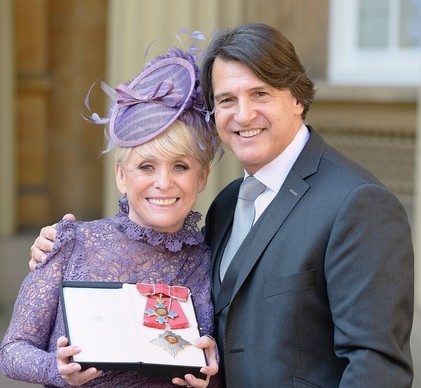
The BARBARA Alliance will work closely with the People’s Forum, chaired by Dame Barbara Windsor’s widower, Scott Mitchell.
Mr Mitchell responded to the announcement, saying it would “be welcomed by everyone who has experienced the devastation of dementia as it shows that this country is getting serious about discovering new treatments.”
“I was with Barbara when we went to Downing Street to meet then Prime Minister Boris Johnson.
“She said to him, ‘Now come on, darling, you’ve got to do something about helping people with this dementia business. There’s not enough money for it. There’s not enough funding.
“For me, this means Barbara won’t just be remembered for her bra flying off in Carry on Camping, she’s got a second legacy.
“I’m hugely excited with the progress being made and today’s announcement from the Prime Minister Andy Burnham, who also has personal experience like myself and so many others”
Dr Ruth McKernan, chair of the scientific steering committee of The BARBARA Alliance, welcomed the funding commitment.
“The Dementia Goals Programme found many useful programmes already funded across the UK. The goal of The BARBARA Alliance is to connect excellent initiatives together to enable patients to get into trials more easily and enable companies to trial their new medicines in the UK.”
Kaivan Khavandi, SVP, Head of R&D Translational & Development Sciences, GSK said: “Our partnership in The BARBARA Alliance is a crucial step to advance research into dementia. By working together with the UK government and other partners, we aim to create a more dynamic and agile way to accelerate scientific trials. We’re proud to be a founding member and believe the partnership will help bring much-needed innovation to patients faster.”
Ken Rhodes, Vice President, Neuroscience research at BMS said: “By bringing together diverse stakeholders to generate unique datasets that we can interrogate with advance AI/ML approaches, BARBARA will help the Alzheimer’s field ask better questions and accelerate progress for patients in need.
“Consortia like The BARBARA Alliance are critical in Bristol Myers Squibb’s efforts to build the right tools and biomarkers as we explore both symptomatic and disease-modifying approaches, all in service of our ultimate ambition to bring medicines to patients faster.”
Niranjan Bose, Managing Director, Health & Life Sciences at Gates Ventures, said they were proud to support this partnership and its ambition to turn scientific progress into treatments that reach patients faster.”
“Recruiting the right people, at the right time, remains one of the biggest bottlenecks in developing new treatments for Alzheimer’s and other dementias,” he said.
“The UK has a remarkable opportunity to change that by bringing together its strengths in health data, the NHS, research and clinical trials.
“The BARBARA Alliance is exactly the kind of investment the field needs; making it easier for people to find and participate in research, while connecting data, research and clinical capabilities across the UK, and a faster path for researchers to evaluate promising new treatments and recruit participants more efficiently.”